Is There a Deodorant You Can Use All Over Your Body?
Share
Yes, and it's not a gimmick. Whole body deodorants are a real, dermatologist-tested product category built specifically for this purpose. But there's a right way to use them, a right formula to look for, and a few things that get misunderstood about how they actually work.
This guide covers all of it where you can use whole body deodorant, which ingredients do the actual work, what format to pick for which area, and when a dedicated formula genuinely matters versus when your regular deodorant will do the job fine.
What Is a Whole Body Deodorant, Exactly?
A whole body deodorant is a formula built to be safe and effective on areas of the body beyond the underarms places like the groin, inner thighs, underboob, feet, and skin folds. That distinction matters more than it sounds.
Standard underarm deodorants are developed and safety-tested specifically for underarm skin. They're not tested on the thinner, more sensitive skin in fold areas or near intimate zones. Whole body formulas are.
That means different pH balance, gentler ingredient profiles, no high-alcohol or synthetic fragrance bases that irritate sensitive skin, and often a format that works for targeted application cream, wipe, or stick rather than just the classic twist-up stick most people picture when they think of deodorant.
Where Can You Actually Use It? A Body-by-Body Breakdown
The short answer: anywhere you experience odor caused by sweat and bacteria. That's the target. Since body odor is driven by apocrine glands concentrated in specific zones whole body deodorant works best in those specific zones rather than being applied everywhere indiscriminately.
Here's where it genuinely helps, and what format works best for each area:
Underarms The obvious starting point. Any whole body formula works here. If you already have a dedicated whole body stick, it handles underarms just as well as a standard deodorant, often better, if you have sensitive skin that reacts to conventional formulas.
Underboob and Chest One of the most commonly neglected odor zones. Moisture collects here throughout the day, bacteria multiply, and most people don't think to do anything about it until it's already a problem. A spray or wipe works well for quick, even coverage over a larger area.
Groin (External Skin Only) High apocrine gland activity makes this a prime odor zone. The key phrase is external skin only the vaginal canal does not need and should not have any deodorant product applied to it. It's a self-regulating environment, and introducing products disrupts that. For the external groin area, use a cream formula that is gynecologist-tested and fragrance-free.
Inner Thighs Friction combined with sweat and bacteria makes inner thighs both an odor zone and a chafing zone. An anti-chafe stick works especially well here because it handles both issues simultaneously controlling odor and reducing the friction that causes irritation.
Feet Sweat, enclosed footwear, and bacteria are a reliable recipe for odor. Feet respond well to spray formats (easy coverage, dries fast) or a cream applied to clean, dry skin before putting on socks. The antibacterial activities in a good whole body formula do the work that regular foot powder alone doesn't.
Lower Back, Behind the Knees, and Belly Folds Less commonly discussed but legitimate odor zones for many people, especially in warm weather or during exercise. A spray handles these areas well because they're harder to reach and cover with a stick or cream.
Important: More product does not mean more effectiveness. A thin, even application on clean, dry skin is what works. And for new areas especially sensitive ones always do a patch test first. Apply a small amount to the inside of your wrist or elbow, leave it 24-48 hours, and check for any reaction before using it on a larger or more sensitive zone.
What Ingredients Actually Work?
The effectiveness of a whole body deodorant comes down almost entirely to what's in it. Here's what to look for and what to avoid.
Ingredients that have real evidence behind them:
Mandelic Acid — A gentle alpha-hydroxy acid with proven antibacterial properties. It targets odor-causing bacteria at the skin surface while being mild enough for sensitive areas. It's one of the better activities in this category because it does the antimicrobial work without being harsh.
Magnesium Carbonate or Magnesium Hydroxide — These raise the skin's pH slightly, creating an environment where odor-causing bacteria struggle to thrive. Magnesium-based formulas have become a common alternative to baking soda — similar mechanism, significantly gentler on skin.
Cyclodextrin — Works differently from antibacterial ingredients. Instead of killing bacteria, cyclodextrin traps and neutralizes odor molecules already in the air, giving a second layer of odor control on top of the antimicrobial function.
Tapioca Starch or Arrowroot Powder — Natural moisture absorbers that keep skin dry without blocking sweat glands. Important for areas prone to moisture buildup inner thighs, skin folds, underboob.
Zinc Ricinoleate — Binds to malodor compounds and neutralizes them. Common in clinical odor-control formulations and well-supported by research.
Aloe Vera and Shea Butter — Not odor fighters themselves, but they condition and protect the skin, which matters a lot when you're using a product in areas prone to friction and sensitivity.
What to avoid in a whole body deodorant - especially for sensitive areas:
1) High alcohol content (drying and irritating on thin, sensitive skin)
2) Synthetic fragrances (a common cause of contact dermatitis near intimate zones)
3) Parabens and phthalates
4) Baking soda (effective but pH is high enough to cause irritation in sensitive skin folds magnesium is a gentler swap)
5) SLS (Sodium Lauryl Sulfate)
If you want to go deeper on how different formulas stack up for people with sensitive skin or heavy sweating, The Reality of Natural Antiperspirants for Heavy Sweating covers what's realistic versus what's marketing when it comes to natural odor and sweat control.
Can You Just Use Your Regular Deodorant Instead?
This comes up constantly. The technical answer is yes many people already do. But there are real reasons why a purpose-built formula matters, especially for sensitive areas.
Regular underarm deodorants are formulated and tested for underarm skin specifically. Underarm skin is different from the skin in your groin or inner thighs, different pH, different thickness, different sensitivity. Using a formula with synthetic fragrance, high alcohol, or an unbalanced pH in those areas is a real cause of irritant contact dermatitis.
The skin near the vaginal opening is especially worth being careful with. Disrupting the local pH balance even slightly can create conditions for bacterial vaginosis or yeast infections. A standard deodorant stick was not formulated with that in mind.
That doesn't mean disaster automatically follows if you use your regular deodorant somewhere other than your underarm. Plenty of people do it without issue. But the risk increases significantly on sensitive areas, and a whole body formula removes that guesswork entirely because it was built for those zones from the start.
If you're still weighing whether you need a separate product at all, Can Any Deodorant Be Used as a Whole Body Deodorant? answers that question directly with a comparison of what's actually different between standard and whole body formulas.
How to Apply Whole Body Deodorant — The Right Way
Application matters more than most people give it credit for. A few simple habits make the difference between a formula that performs all day and one that feels like it wears off by noon.
Step 1 — Start with clean, dry skin. Whole body deodorant works best immediately after a shower once you've toweled off completely. Applying over moisture or existing sweat significantly reduces effectiveness.
Step 2 — Use less than you think you need. These formulas are concentrated. A thin, even layer is sufficient. For cream formats, a pea-sized amount goes a long way for a targeted area.
Step 3 — Let it absorb before dressing. Give it 30–60 seconds. Rushing reduces effectiveness and increases the chance of transfer onto clothing.
Step 4 — Target the zones, don't cover everything. Apply where you actually experience odor — the apocrine-rich areas. Covering your entire body is wasteful and unnecessary, since most of your skin doesn't have the gland activity that causes odor.
Step 5 — Reapply when necessary. After an intense workout, or if you're in high heat for an extended period, a touch-up is reasonable. Deodorant wipes are a practical way to do this on the go — fast, portable, no mess.
Step 6 — Patch test new areas first. Any time you're using a formula on a zone you haven't tried before, give it 24-48 hours on a small spot first. This is especially important for intimate areas or if you have a history of sensitive skin or contact dermatitis.
Which Format Should You Use? Stick, Wipe, or Spray
The format you choose should match the area you're treating. Using the wrong format doesn't make the formula fail but the right one makes application easier and often more effective.
Stick
Best for underarms, inner thighs, and anti-chafe zones. A solid stick provides concentrated, controlled application you know exactly where it's going, and there's no dripping or mess. The Fomin Whole Body Deodorant Stick is built for multi-area use with a formula gentle enough for sensitive skin — not adapted from an underarm formula but built with the full body in mind.
Sticks also tend to have longer staying power than wipes for high-activity situations. If you're heading into a long workday or a workout, a stick gives you the most reliable wear time.
Wipes
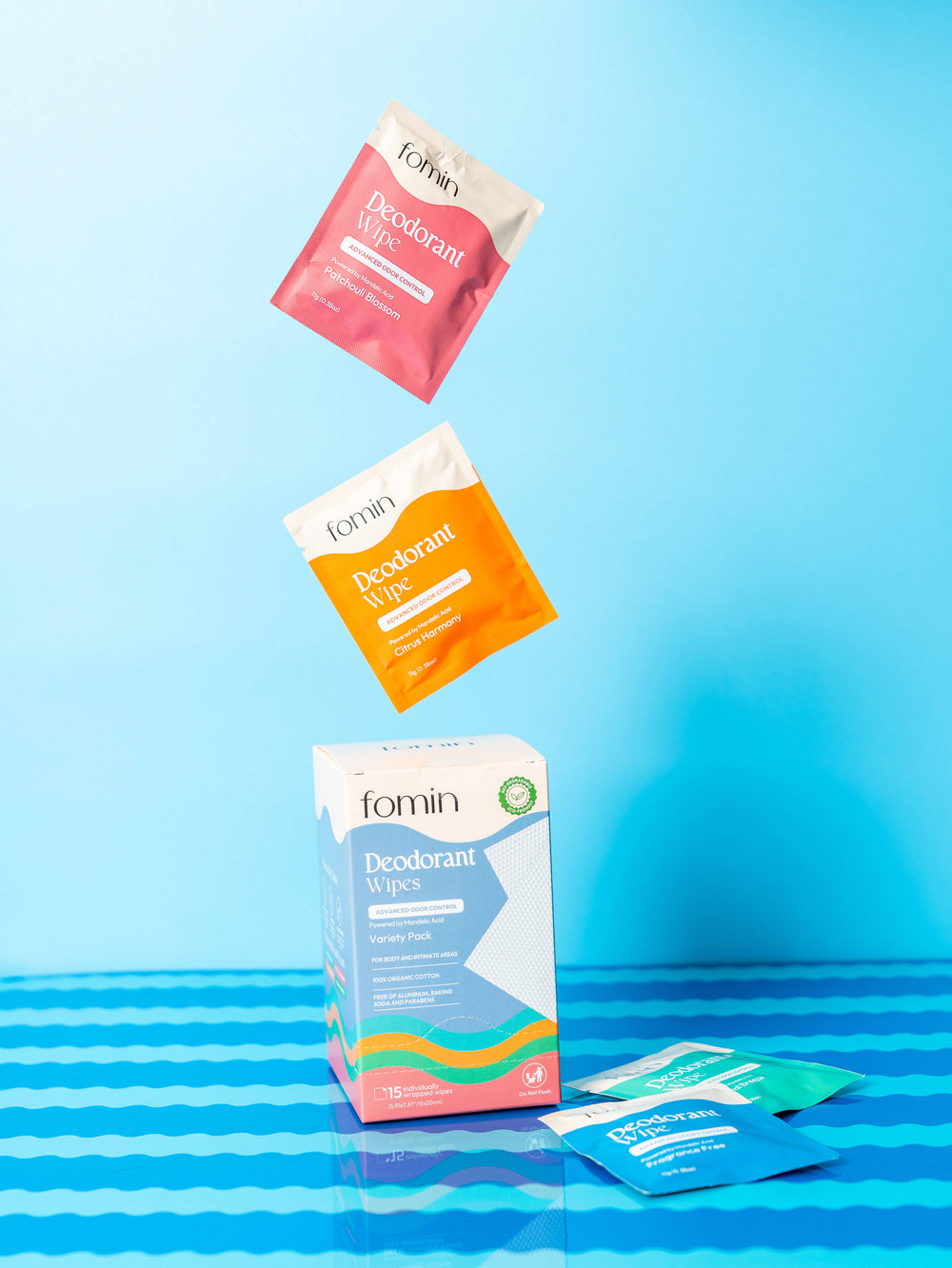
Ideal for on-the-go freshening, post-gym touch-ups, and travel. Fomin's AHA Deodorant Wipes are formulated with Vitamin E and Aloe, making them safe for use on multiple body areas. They're individually wrapped, which makes them hygienic and genuinely convenient for a gym bag or travel kit.
If you've ever wondered whether deodorant wipes actually work or are just a convenience product, Do Deodorant Wipes Work? All You Need to Know gives you a straight answer. And for specific use-case scenarios gym, travel, long workdays When Is the Best Time to Use Deodorant Wipes? is worth a read.
Spray
Works well for large surface areas like the back, chest, and lower body. Fast drying, good coverage, easy application without having to touch the area directly. The trade-off is that aerosol sprays can irritate sensitive skin and aren't great for use in enclosed spaces or around people. For a full breakdown of what to watch out for, Is Spray Deodorant Bad for You? covers the honest version of that question.
Not sure which format is right for your routine? Sticks vs. Wipes vs. Spray Deodorant — Which Is Best for You? walks through all three in detail.
What Dermatologists Say About Safety
The general consensus from dermatologists is that whole body deodorants are safe when used as directed on external skin and a meaningful improvement over using underarm-only formulas on sensitive areas.
A few things the research and medical guidance are consistent on:
Fragrance-free and hypoallergenic formulas are the safest choice for skin folds and intimate-adjacent areas. Synthetic fragrances are a leading cause of allergic contact dermatitis, and the risk is higher in areas where skin is thinner or more reactive.
Patch testing before using a new product on a sensitive area is not just a caution, it's genuinely good practice. Even well-formulated products can cause a reaction in individuals with specific sensitivities.
Gynecologists consistently emphasize external use only for anything applied near intimate areas. The vaginal microbiome is sensitive and doesn't benefit from product intervention. External skin is a different story; it can handle well-formulated, pH-appropriate deodorant products.
People with eczema, psoriasis, or a history of contact dermatitis should be extra careful and consult a dermatologist before using new products on affected or adjacent areas.
Frequently Asked Questions
Can I use whole body deodorant on my private parts?
External skin only. Never use any deodorant inside the vaginal canal. It's self-cleaning and doesn't need it. The external skin of the groin area is appropriate for whole body deodorant use when the formula is gynecologist-tested, fragrance-free, and pH-appropriate for sensitive skin.
Is whole body deodorant safe for sensitive skin?
Yes, provided the formula is fragrance-free, alcohol-free, and dermatologist-tested. The ingredients to avoid for sensitive skin are synthetic fragrance, baking soda (in some people), parabens, and high-alcohol bases. Fomin's formulas are built around this specifically — you can find more on the ingredient approach in What You Need to Know About the Ingredients in Fomin's Deodorant Wipes.
Is whole body deodorant the same as antiperspirant?
No. Deodorant manages odor by targeting bacteria and neutralizing odor molecules. Antiperspirant reduces sweat production by temporarily blocking sweat ducts, usually with aluminum salts, and is FDA-regulated as a drug. Most whole body deodorants are aluminum-free they address odor, not sweat volume. If you're dealing with excessive sweating specifically, The Reality of Natural Antiperspirants for Heavy Sweating is worth reading before you decide what you need.
How often should I apply whole body deodorant?
Once daily after showering is the baseline for most people. Reapply after intense exercise or extended time in heat. Deodorant wipes make mid-day reapplication genuinely easy they're safe for daily use and designed for exactly this scenario.
Can men use whole body deodorant?
Yes, completely. Groin, feet, chest, and inner thighs are common odor zones for men, and whole body deodorant addresses all of them. The formulas aren't gendered in the way that traditional deodorant marketing often is.
Will whole body deodorant stain my clothes?
Aluminum-free, cream and stick formats are far less likely to stain than traditional antiperspirants. Letting the formula absorb fully before dressing around 30–60 seconds is the main factor in avoiding any transfer.
What if my deodorant has stopped working?
That's usually not a formula problem it's often an application method, hormonal changes, diet, or the body adjusting during a transition from conventional deodorant to a natural formula. Why Your Deodorant Stops Working covers the most common reasons and what to do about each one.
The Bottom Line
Yes, there is a deodorant you can use all over your body. Whole body deodorants are a legitimate, well-formulated product category with real science behind the active ingredients. The key is choosing one that was actually built for all-over use from the start, not one that's just applying a broader label to an underarm formula.
The formula matters. The format matters. And where you apply it matters to target the apocrine-rich zones where bacteria drive odor, not the entirety of your skin.
Fomin's Whole Body Deodorant Stick is aluminum-free, dermatologist-tested, and formulated for use across multiple body areas. It's built around mandelic acid, magnesium carbonate, cyclodextrin, and tapioca starch, a combination that addresses bacteria, pH balance, odor neutralization, and moisture simultaneously. No parabens, no synthetic dyes, no fragrance that doesn't belong on sensitive skin.

about the author
Mursal
Founder, Fomin
Mursal is the founder of Fomin and the voice behind its approach to conscious self-care. She believes everyday routines should feel simple, intentional, and free from unnecessary waste.
Driven by a passion for thoughtful design, Mursal creates products that are functional, minimal, and genuinely easy to use in real life. Through Fomin, she's on a mission to make sustainable self-care feel effortless - not overwhelming.